Via networkedculture:
A photo essay that examines the interplay of the practical, the valuable and the sentimental.
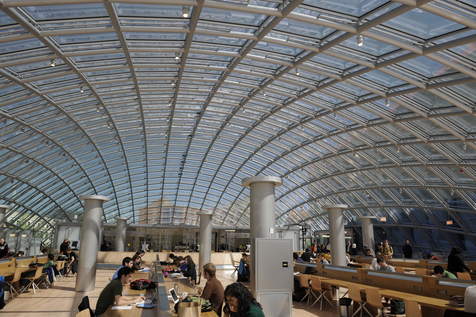
An $81 million library opened Monday at the University of Chicago.
And there’s not a book in sight.
Designed by architect Helmut Jahn, the Joe and Rika Mansueto Library provides 180 seats for students and faculty to study under a glass dome constructed from 691 panels, none of them exactly the same shape. The library also expands digitization and conservation operations for the university’s collections, which include a piece of a Gutenberg Bible and books printed on papyrus, ancient Egypt’s version of paper.
Fifty feet below ground on the Hyde Park campus, a system of five automated cranes retrieves and stores volumes that are sorted according to book size, not content. The new library has room for 3.5 million volumes in the underground area, which is not accessible to anyone but select library staff.
Check out this incredible video on how the University of Chicago’s automated library works.
Via networkedculture:
A photo essay that examines the interplay of the practical, the valuable and the sentimental.

The Space Shuttle Endeavour’s Final Launch seen from a commercial plane window, captured by Stefanie Gordon.
Stunning.
Wow.

Via unconsumption:
It’s wine o’clock (somewhere) — time to share a wine-related repurposing find:
Wine corks used as plant markers! (spotted on Pinterest)
For additional wine-spiration, check out earlier Unconsumption posts here.
Cheers!
Today in things I love.
“In a world of instant musical gratification, where tunes from any genre or artist are available at the click of a mouse, can classical music remain relevant to the digital generation?”
BBC News – Is classical music doomed?
A video of the debate (between participants Stephen Fry, BBC Radio 1 DJ Kissy Sell Out, Greg Sandow, et al.) will be available on the Cambridge Union Society’s Web site.
“Could baseball have a lesson for music lovers that would allow us to appreciate the past and the present at the same time? What is behind this ability of baseball fans to connect the present action to the sport’s past glory and still appreciate the moment-to-moment excitement of the players on the field? These aren’t distinct functions of sports fandom; they are closely related to each other, and they inform each other. A fan appreciates the successes of the past more as he or she sees contemporary players working to succeed now, and vice versa. This is the kind of thinking that the institutions of classical music need to promote if we want the field refreshed by new music and musicians.”